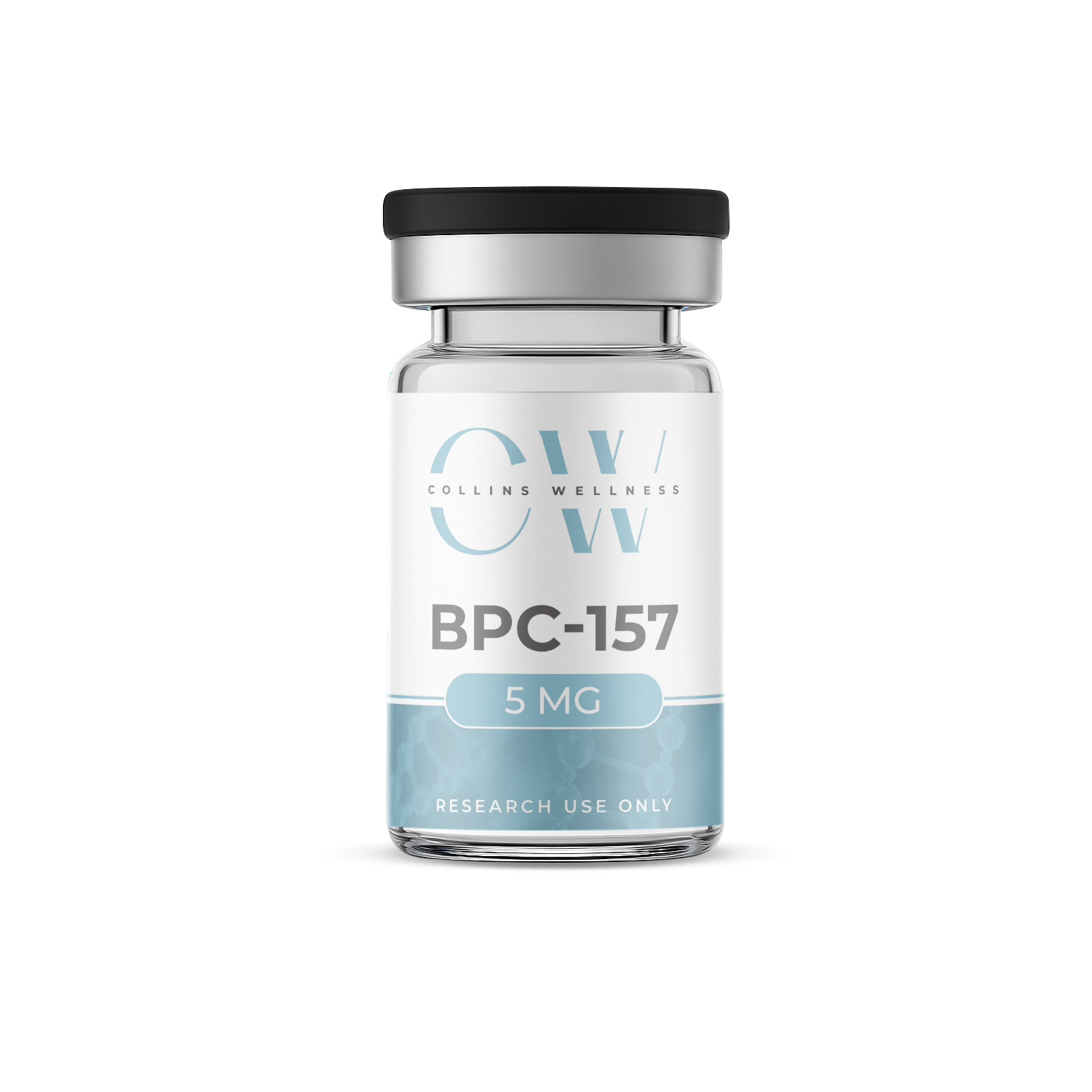
BPC-157
Tissue-repair research peptide · Third-party COA on every batch
✓ Third-party verified purity · ✓ ISO/IEC 17025 accredited COA · ✓ US-shipped · ✓ Batch-tested
COA
Third-party Certificate of Analysis, every batch
17025
ISO/IEC accredited testing laboratory
USA
Domestic cold-chain fulfillment
Batch
Independently tested, every batch
Research Use Only (RUO). This article is for educational and informational purposes only. BPC-157 and all compounds discussed are intended solely for in-vitro laboratory research and are not for human or veterinary use, consumption, or application. Nothing here is medical advice or a claim of therapeutic benefit.
What Is BPC-157?
BPC-157 is one of the most widely studied synthetic peptides in preclinical literature. It is a stable, 15-amino-acid sequence derived from a naturally occurring protein found in gastric juice, and it has become a frequent subject of laboratory research into cellular repair and signaling pathways.
For researchers, three characteristics make BPC-157 a common reference compound: it is comparatively stable under laboratory conditions, it appears in a large body of published animal and in-vitro studies, and it is synthesized to well-defined specifications that make batch-to-batch consistency measurable. At Collins Wellness, BPC-157 is supplied as a lyophilized powder verified to ≥98% purity for in-vitro research use only.
Studied Mechanisms of BPC-157 (In-Vitro and Preclinical)
It is important to frame this section correctly: all published evidence to date comes from animal or cell-based models, and no completed human clinical trials have been reported. With that caveat, the research literature describes several signaling pathways that investigators have examined.
Angiogenesis and VEGFR2 signaling. In cell and animal models, BPC-157 has been associated with increased VEGFR2 expression and internalization, activating the downstream Akt–eNOS pathway that is central to endothelial tube formation and blood-flow recovery after ischemia. When researchers introduced a VEGFR2 inhibitor, that pathway was no longer activated and tube formation no longer occurred in vitro — evidence that the effect is mediated through VEGFR2 signaling.
Growth-factor signaling. In tendon-derived fibroblast studies, BPC-157 has been reported to up-regulate the growth-hormone receptor (GHR) at both mRNA and protein levels, with augmented downstream JAK2 signaling in response to growth hormone.
Fibroblast activity and cell migration. In-vitro and ex-vivo tendon models have examined BPC-157's influence on fibroblast outgrowth, cytoskeletal organization, and cell migration, exploring focal adhesion kinase (FAK) and paxillin phosphorylation as potential intracellular targets.
Nitric oxide and dopaminergic modulation. Additional preclinical work has explored BPC-157's interaction with nitric oxide synthesis and the dopaminergic system, which is one reason it appears across such a broad range of experimental designs.
These pathways are why BPC-157 remains a productive tool compound for investigators studying tissue-repair signaling in controlled laboratory settings — not a statement about outcomes in humans.
Why Purity Matters in Peptide Research
In peptide research, purity is not a marketing figure — it is a variable that directly affects whether an experiment is reproducible. Impurities such as truncated sequences, deletion peptides, or residual synthesis reagents can interfere with assay readouts and confound results.Every Collins Wellness peptide is verified to ≥98% purity by third-party laboratory testing and documented in a Certificate of Analysis (COA), so the compound in the vial matches the compound on the label.
Proper Storage and Handling of BPC-157
Peptide integrity depends heavily on storage. Lyophilized (freeze-dried) BPC-157 is more stable than reconstituted solution, which is why it is shipped as a powder in sealed, sterile vials.
For lyophilized peptides, general laboratory practice is to store at approximately -4°F for long-term storage (up to about 24 months) and at 36–46°F (refrigerated) for short-term storage (up to about 3 months). In all cases, keep vials away from light, moisture, and repeated temperature fluctuations, since freeze-thaw cycling accelerates degradation. Once reconstituted, peptides are far less stable and should be handled according to the specific protocol being followed.
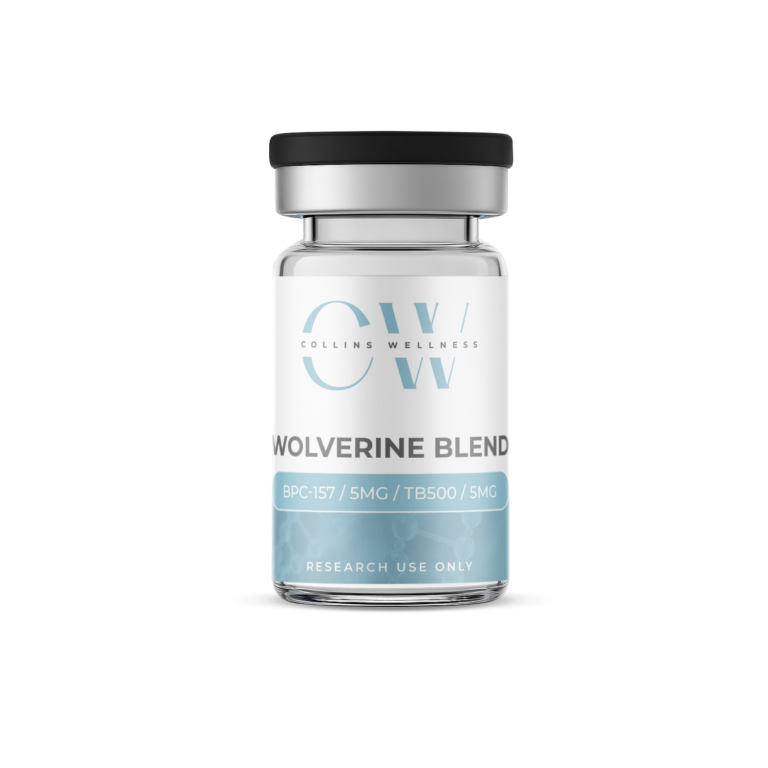
Collins Wellness supplies research-grade peptides — including BPC-157, and popular blends such as GLOW (GHK-Cu / BPC-157 / TB-500) — manufactured under strict quality-control protocols and verified to ≥98% purity. Browse the full range in the Popular Peptides category or the complete research peptide catalog.
Frequently Asked Questions
Is BPC-157 approved for human use?
No. BPC-157 is not approved by the FDA to diagnose, treat, cure, or prevent any disease, and it is sold strictly for in-vitro laboratory research. All published data comes from animal and cell-based models.
What purity should research BPC-157 have?
How is BPC-157 supplied?
As a lyophilized (freeze-dried) powder in a sealed, sterile vial, which maximizes stability and shelf life during shipping and storage.
Who can purchase research peptides?
Qualified researchers and laboratory professionals — including academic labs, biotech and pharmaceutical companies, and independent research institutions — for legitimate scientific research only.
Explore Further
For more research guides, peer-reviewed study summaries, and scientific analysis, visit the Collins Wellness Research Peptide Blog.
Full Disclaimer: Any mention of research chemicals, peptides, or related compounds is for educational and informational purposes only. These materials are not intended for human or veterinary use, consumption, or application, and are not classified as drugs, dietary supplements, or food products under applicable law. All products are intended solely for in-vitro laboratory research use only (RUO). They are not FDA-approved for human use, diagnosis, treatment, cure, or prevention of any disease. Always consult a licensed professional regarding any health-related questions.
Shop research-grade BPC-157
Ships lyophilized with its batch Certificate of Analysis.