NAD+
Cellular-metabolism research molecule · Third-party COA on every batch
✓ Third-party verified purity · ✓ ISO/IEC 17025 accredited COA · ✓ US-shipped · ✓ Batch-tested
COA
Third-party Certificate of Analysis, every batch
17025
ISO/IEC accredited testing laboratory
USA
Domestic cold-chain fulfillment
Batch
Independently tested, every batch
Research Use Only (RUO). This article is for educational and informational purposes only. NAD+ and all compounds discussed are intended solely for in-vitro laboratory research and are not for human or veterinary use, consumption, or application. Nothing here is medical advice or a claim of therapeutic benefit.
What Is NAD+?
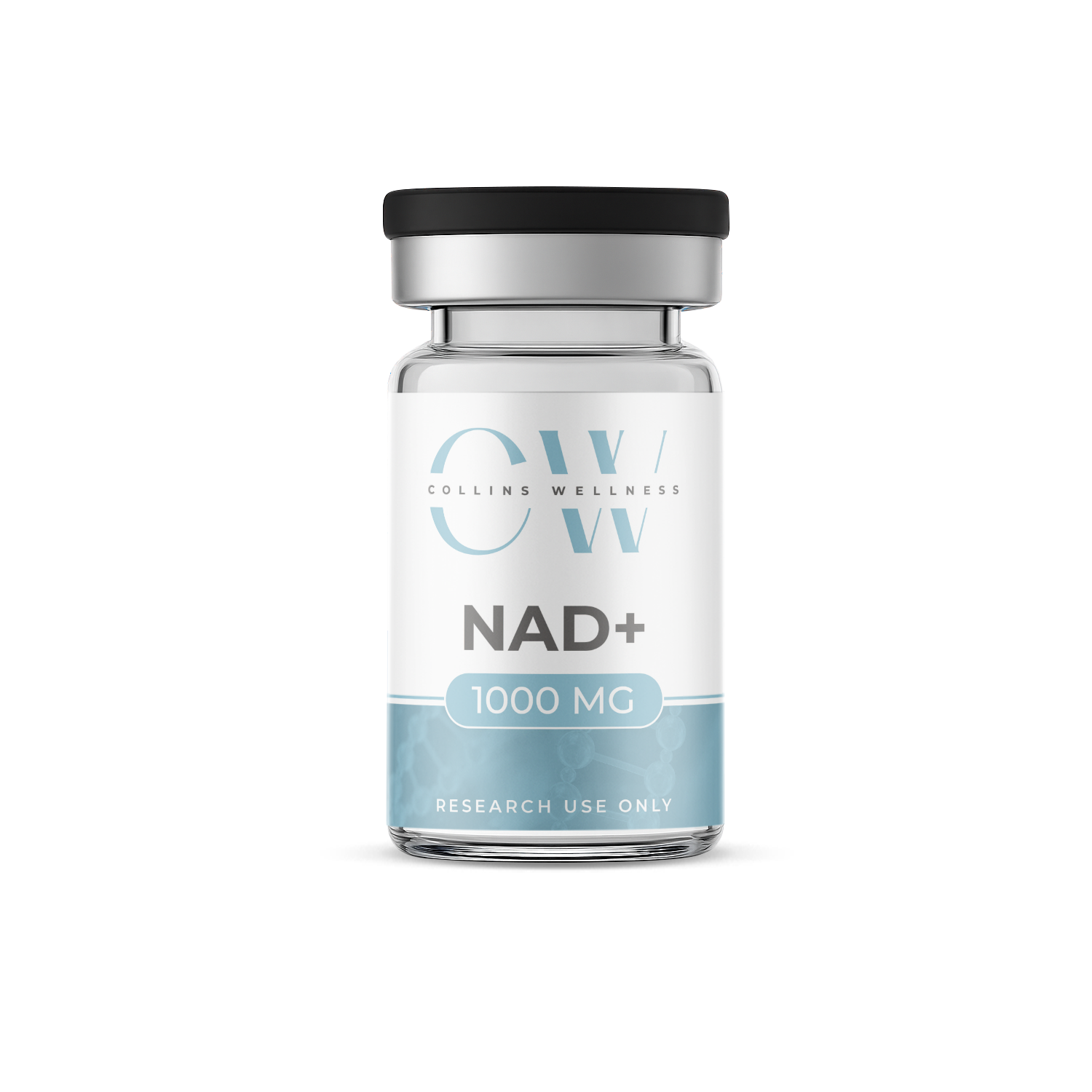
Nicotinamide adenine dinucleotide (NAD+) is one of the most fundamental molecules in cell biology. Together with its reduced form, NADH, it functions both as a redox coenzyme in energy metabolism and as a signaling substrate for a range of enzymes. Because it sits at the intersection of metabolism, mitochondrial function, and aging biology, NAD+ is a central reference compound across enormous swaths of research. At Collins Wellness, NAD+ is supplied as a lyophilized powder verified to ≥98% purity for in-vitro research use only.
Studied Roles of NAD+ (In-Vitro and Preclinical)
Unlike single-target peptides, NAD+ is a broadly acting cofactor, so its "mechanisms" are really the many cellular systems that depend on it. Key themes from the literature:
Energy metabolism (redox coenzyme). In glycolysis, fatty-acid oxidation, and the TCA cycle, NAD+ acts as a hydrogen-ion acceptor to form NADH, which then serves as the primary electron donor in the mitochondrial respiratory chain that drives ATP production via oxidative phosphorylation.
Sirtuin signaling. NAD+ is a required substrate for sirtuins (SIRT1–7), a family of NAD+-dependent deacylase enzymes. Mitochondrial sirtuins (SIRT3, 4, 5) are heavily studied: SIRT3, for example, deacetylates SOD2 and IDH2 to modulate oxidative stress, OPA1 to influence mitochondrial fusion, and PGC-1α in the context of mitochondrial biogenesis.
Other NAD+-consuming enzymes. NAD+ is also a substrate for PARPs (poly-ADP-ribose polymerases) involved in DNA-damage signaling and CD38, linking NAD+ homeostasis to genome maintenance and immune signaling in research models.
Mitochondria and aging biology. An intertwined relationship exists between NAD+ and mitochondria; in study models, dysregulated NAD+ homeostasis is associated with impaired energetics and increased oxidative stress, which is why NAD+ features prominently in cellular-aging and cardiometabolic research.
Why Purity Matters
Because NAD+ is used to probe precise metabolic and enzymatic readouts, impurities or degradation products can distort experimental results and undermine reproducibility.Every Collins Wellness product is verified to ≥98% purity by third-party testing and documented in a Certificate of Analysis (COA).
Storage and Handling
NAD+ ships as a lyophilized (freeze-dried) powder in sealed, sterile vials. General laboratory practice is to store lyophilized material at approximately -4°F for long-term storage (up to ~24 months) and 36–46°F refrigerated for short-term storage (up to ~3 months), away from light, moisture, and repeated freeze-thaw cycling. Reconstituted material is less stable and should be handled per the specific research protocol.
Frequently Asked Questions
What is NAD+?
Nicotinamide adenine dinucleotide, an essential coenzyme and signaling substrate central to energy metabolism, sirtuin activity, and mitochondrial function.
What does NAD+ do in research models?
It serves as a redox coenzyme in metabolism and as a substrate for sirtuins, PARPs, and CD38, making it central to studies of metabolism, DNA repair, and cellular aging. All evidence discussed is preclinical.
Is NAD+ approved for human use?
No. It is not FDA-approved to diagnose, treat, cure, or prevent any disease and is sold strictly for in-vitro laboratory research.
What purity should research NAD+ have? Explore Further
Browse the Research Compounds category or the complete research peptide catalog, and visit the Collins Wellness Research Peptide Blog for more research guides.
Full Disclaimer: Any mention of research chemicals, peptides, or related compounds is for educational and informational purposes only. These materials are not intended for human or veterinary use, consumption, or application, and are not classified as drugs, dietary supplements, or food products under applicable law. All products are intended solely for in-vitro laboratory research use only (RUO). They are not FDA-approved for human use, diagnosis, treatment, cure, or prevention of any disease. Always consult a licensed professional regarding any health-related questions.
Shop research-grade NAD+
Ships lyophilized with its batch Certificate of Analysis.