
GHK-Cu
Copper research peptide for skin and repair studies · Third-party COA on every batch
✓ Third-party verified purity · ✓ ISO/IEC 17025 accredited COA · ✓ US-shipped · ✓ Batch-tested
COA
Third-party Certificate of Analysis, every batch
17025
ISO/IEC accredited testing laboratory
USA
Domestic cold-chain fulfillment
Batch
Independently tested, every batch
Research Use Only (RUO). This article is for educational and informational purposes only. GHK-Cu and all compounds discussed are intended solely for in-vitro laboratory research and are not for human or veterinary use, consumption, or application. Nothing here is medical advice or a claim of therapeutic benefit.
What Is GHK-Cu?
GHK-Cu is the copper(II) complex of the tripeptide glycyl-L-histidyl-L-lysine (GHK). First isolated from human plasma in the early 1970s, it has become one of the most extensively studied peptides in skin-biology and tissue-repair research. Its small size and copper-binding chemistry make it a frequent reference compound in fibroblast and extracellular-matrix experiments. At Collins Wellness, GHK-Cu is supplied as a lyophilized powder verified to ≥98% purity for in-vitro research use only.
Studied Mechanisms of GHK-Cu (In-Vitro and Preclinical)
As with all research peptides, the framing matters: the mechanisms below come from cell-based and animal models, and human clinical data remains limited. With that caveat, the literature describes several pathways investigators have examined.
Collagen and matrix synthesis. In fibroblast and wound-research models, GHK-Cu has been reported to stimulate synthesis of collagen and glycosaminoglycans — the structural components of the dermal matrix.
Dual matrix-metalloproteinase (MMP) action. A proposed mechanism involves GHK-Cu up-regulating MMP-2 to clear damaged collagen debris while simultaneously promoting new matrix synthesis — a "remodeling" pattern that makes it useful for studying ordered tissue repair.
Proteasome and signaling modulation. GHK-Cu has been reported to activate the ubiquitin-proteasome system (which degrades damaged or misfolded proteins) and to suppress NF-κB signaling. Researchers have proposed that these properties, combined with its collagen-stimulatory effects, create a multifactorial environment studied in the context of tissue repair.
Elastin and glycosaminoglycans. In treated fibroblast models, studies have reported increased elastin expression and enhanced synthesis of glycosaminoglycans such as dermatan sulfate and hyaluronic acid, which contribute to matrix hydration and resilience parameters in vitro.
Why GHK-Cu Appears in So Many Studies
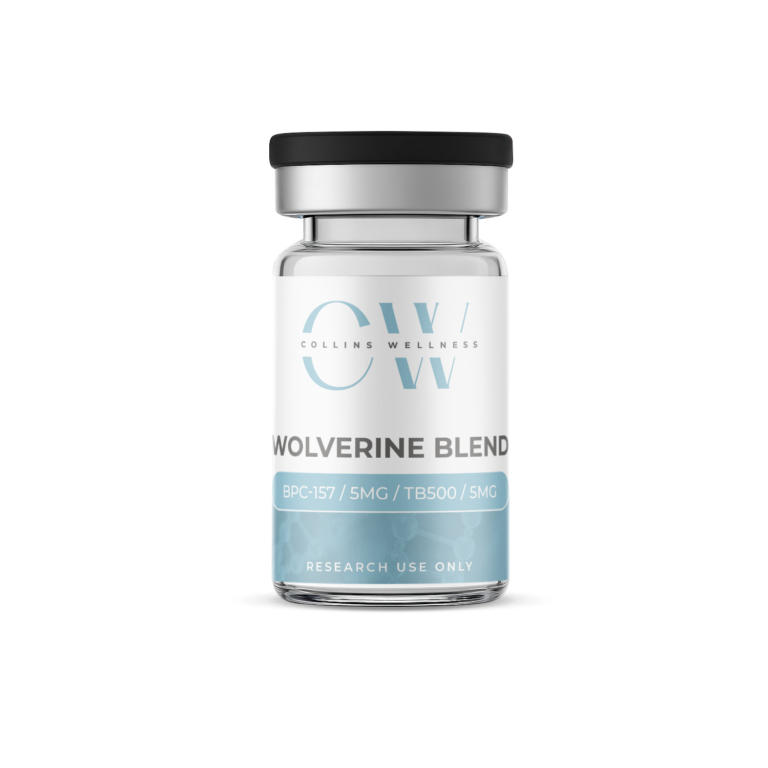
Because it touches collagen synthesis, matrix remodeling, and antioxidant/anti-inflammatory signaling all at once, GHK-Cu is a productive tool compound for researchers modeling skin and connective-tissue biology. It also features in the GLOW blend (GHK-Cu / BPC-157 / TB-500), where it is studied alongside other repair-associated peptides.
Why Purity Matters
Copper-peptide research depends on precise stoichiometry between the peptide and its bound copper, so impurities or inconsistent copper content can distort experimental readouts.Every Collins Wellness peptide is verified to ≥98% purity by third-party testing and documented in a Certificate of Analysis (COA).
Storage and Handling
GHK-Cu ships as a lyophilized (freeze-dried) powder in sealed, sterile vials. General laboratory practice is to store lyophilized material at approximately -4°F for long-term storage (up to ~24 months) and 36–46°F refrigerated for short-term storage (up to ~3 months), away from light, moisture, and repeated freeze-thaw cycling. Reconstituted peptide is less stable and should be handled per the specific research protocol.
Frequently Asked Questions
What is GHK-Cu?
It is the copper(II) complex of the tripeptide glycyl-L-histidyl-L-lysine, isolated from human plasma in the 1970s and widely studied in skin and tissue-repair research.
What does GHK-Cu do in research models?
In fibroblast and wound models it has been reported to stimulate collagen and glycosaminoglycan synthesis, modulate MMP expression, and influence proteasome and NF-κB signaling. All evidence is preclinical.
Is GHK-Cu approved for human use?
No. It is not FDA-approved to diagnose, treat, cure, or prevent any disease and is sold strictly for in-vitro laboratory research.
What purity should research GHK-Cu have? Explore Further
Browse the full range in the Popular Peptides category or the complete research peptide catalog, and visit the Collins Wellness Research Peptide Blog for more research guides.
Full Disclaimer: Any mention of research chemicals, peptides, or related compounds is for educational and informational purposes only. These materials are not intended for human or veterinary use, consumption, or application, and are not classified as drugs, dietary supplements, or food products under applicable law. All products are intended solely for in-vitro laboratory research use only (RUO). They are not FDA-approved for human use, diagnosis, treatment, cure, or prevention of any disease. Always consult a licensed professional regarding any health-related questions.
Shop research-grade GHK-Cu
Ships lyophilized with its batch Certificate of Analysis.