TB-500
Tissue-repair research peptide · Third-party COA on every batch
✓ Third-party verified purity · ✓ ISO/IEC 17025 accredited COA · ✓ US-shipped · ✓ Batch-tested
COA
Third-party Certificate of Analysis, every batch
17025
ISO/IEC accredited testing laboratory
USA
Domestic cold-chain fulfillment
Batch
Independently tested, every batch
Research Use Only (RUO). This article is for educational and informational purposes only. TB-500 and all compounds discussed are intended solely for in-vitro laboratory research and are not for human or veterinary use, consumption, or application. Nothing here is medical advice or a claim of therapeutic benefit.
What Is TB-500?
TB-500 is a synthetic peptide based on the active region of Thymosin Beta-4 (Tβ4), a 43-amino-acid intracellular peptide that is one of the most abundant actin-binding proteins in mammalian cells. Because Tβ4 sits at the center of how cells build and remodel their internal scaffolding, TB-500 has become a heavily studied reference compound in tissue-repair and cell-migration research. At Collins Wellness, Thymosin Beta-4 (TB-500) is supplied as a lyophilized powder verified to ≥98% purity for in-vitro research use only.
Studied Mechanisms of TB-500 (In-Vitro and Preclinical)
As always, the framing matters: these mechanisms come from cell-based and animal models, not human trials. With that caveat, the literature describes several well-characterized pathways.
G-actin sequestration. TB-500's primary and best-characterized molecular function is binding monomeric G-actin (globular actin) in a 1:1 interaction, sequestering it and regulating the pool available for polymerization into F-actin (filamentous actin). By keeping a reserve of actin monomers ready, it influences how quickly cells can reorganize their cytoskeleton — the basis for migration and remodeling.
Cell migration. By modulating actin dynamics, Tβ4 facilitates migration of multiple cell types central to tissue repair — including keratinocytes, endothelial cells, and myofibroblasts — giving them the actin reserve needed to move and remodel.
Angiogenesis. In research models, TB-500 promotes angiogenesis through endothelial cell migration, tube formation, and endothelial progenitor cell recruitment. Notably, this mechanism is described as distinct from VEGFR2-mediated angiogenesis, engaging actin-cytoskeleton regulation; studies have also reported up-regulation of VEGF expression in treated cells.
Broad preclinical interest. Preclinical models spanning wound healing, cardiovascular research, musculoskeletal injury, and neurological conditions have examined TB-500. In one widely cited study, Thymosin Beta-4 was reported to activate cardiac progenitor cells and promote angiogenesis in a mouse model — illustrating why it appears across such a wide range of experimental designs.
TB-500 in Research Blends
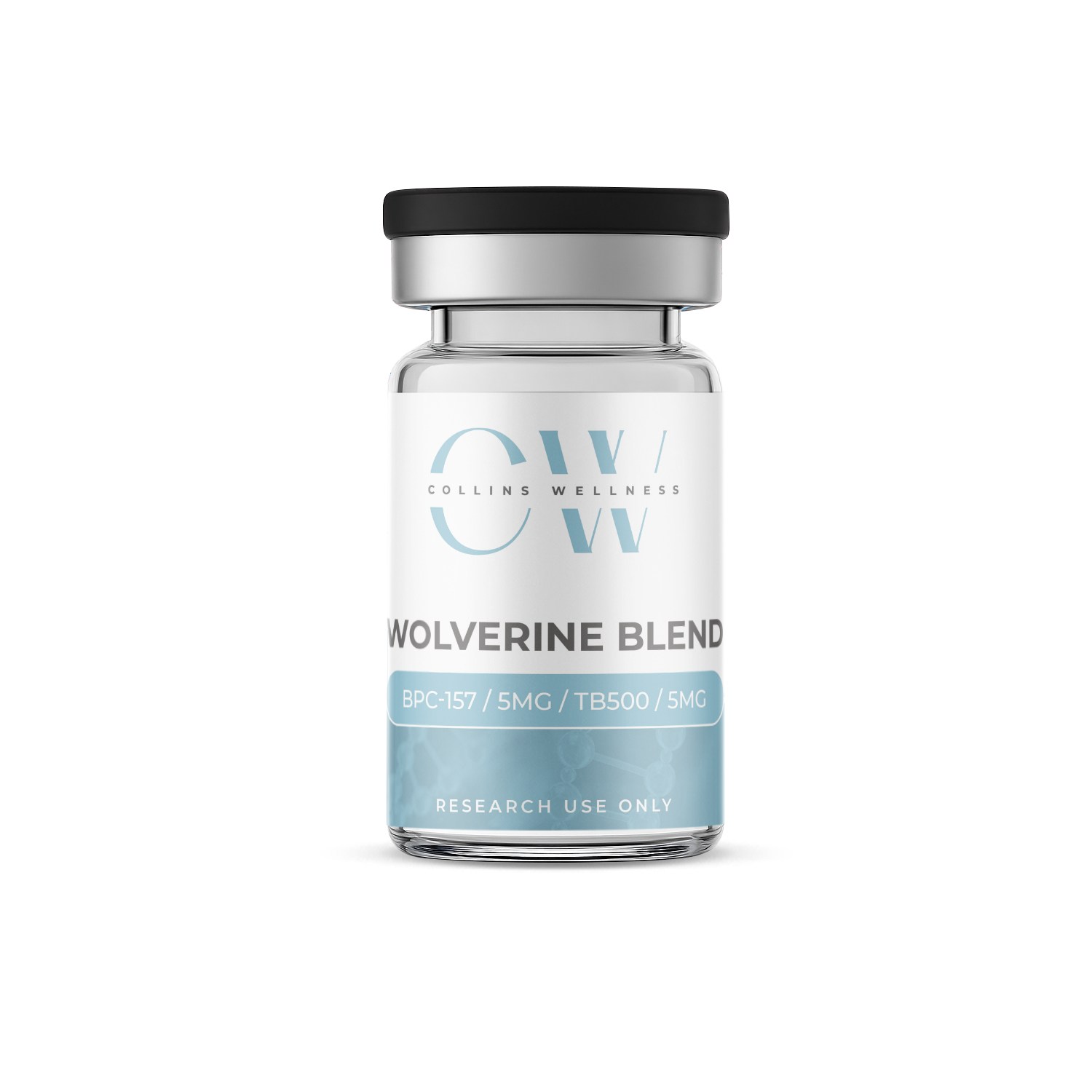
TB-500 is frequently studied alongside other repair-associated peptides. Collins Wellness offers it within the Wolverine Blend (BPC-157 / TB-500) and the GLOW blend (GHK-Cu / BPC-157 / TB-500), where its actin-regulating profile is investigated together with complementary compounds.
Why Purity Matters
Because TB-500 is studied for precise molecular interactions with actin, impurities such as truncated sequences or residual reagents can confound assay readouts and undermine reproducibility.Every Collins Wellness peptide is verified to ≥98% purity by third-party testing and documented in a Certificate of Analysis (COA).
Storage and Handling
TB-500 ships as a lyophilized (freeze-dried) powder in sealed, sterile vials. General laboratory practice is to store lyophilized material at approximately -4°F for long-term storage (up to ~24 months) and 36–46°F refrigerated for short-term storage (up to ~3 months), away from light, moisture, and repeated freeze-thaw cycling. Reconstituted peptide is less stable and should be handled per the specific research protocol.
Frequently Asked Questions
What is the difference between TB-500 and Thymosin Beta-4?
TB-500 is a synthetic peptide based on the active, actin-binding region of the full Thymosin Beta-4 protein. The names are often used interchangeably in research contexts.
How does TB-500 work in research models?
Its best-characterized function is binding monomeric G-actin to regulate the actin pool, which influences cell migration, cytoskeletal remodeling, and angiogenesis in preclinical studies.
Is TB-500 approved for human use?
No. It is not FDA-approved to diagnose, treat, cure, or prevent any disease and is sold strictly for in-vitro laboratory research. All cited data comes from animal and cell-based models.
What purity should research TB-500 have? Explore Further
Browse the full range in the Popular Peptides category or the complete research peptide catalog, and visit the Collins Wellness Research Peptide Blog for more research guides.
Full Disclaimer: Any mention of research chemicals, peptides, or related compounds is for educational and informational purposes only. These materials are not intended for human or veterinary use, consumption, or application, and are not classified as drugs, dietary supplements, or food products under applicable law. All products are intended solely for in-vitro laboratory research use only (RUO). They are not FDA-approved for human use, diagnosis, treatment, cure, or prevention of any disease. Always consult a licensed professional regarding any health-related questions.
Shop research-grade TB-500
Ships lyophilized with its batch Certificate of Analysis.